Stand on a jetty in the Red Sea and you can watch both kinds of reef visitor at once: snorkellers finning slowly across the shallows, faces down, and scuba divers dropping over the edge into blue. Same reef, same fish, entirely different day out. The question is not which one is better. It is which one suits the water you can reach, the time you have, and what you want from the next hour.
What each one actually involves
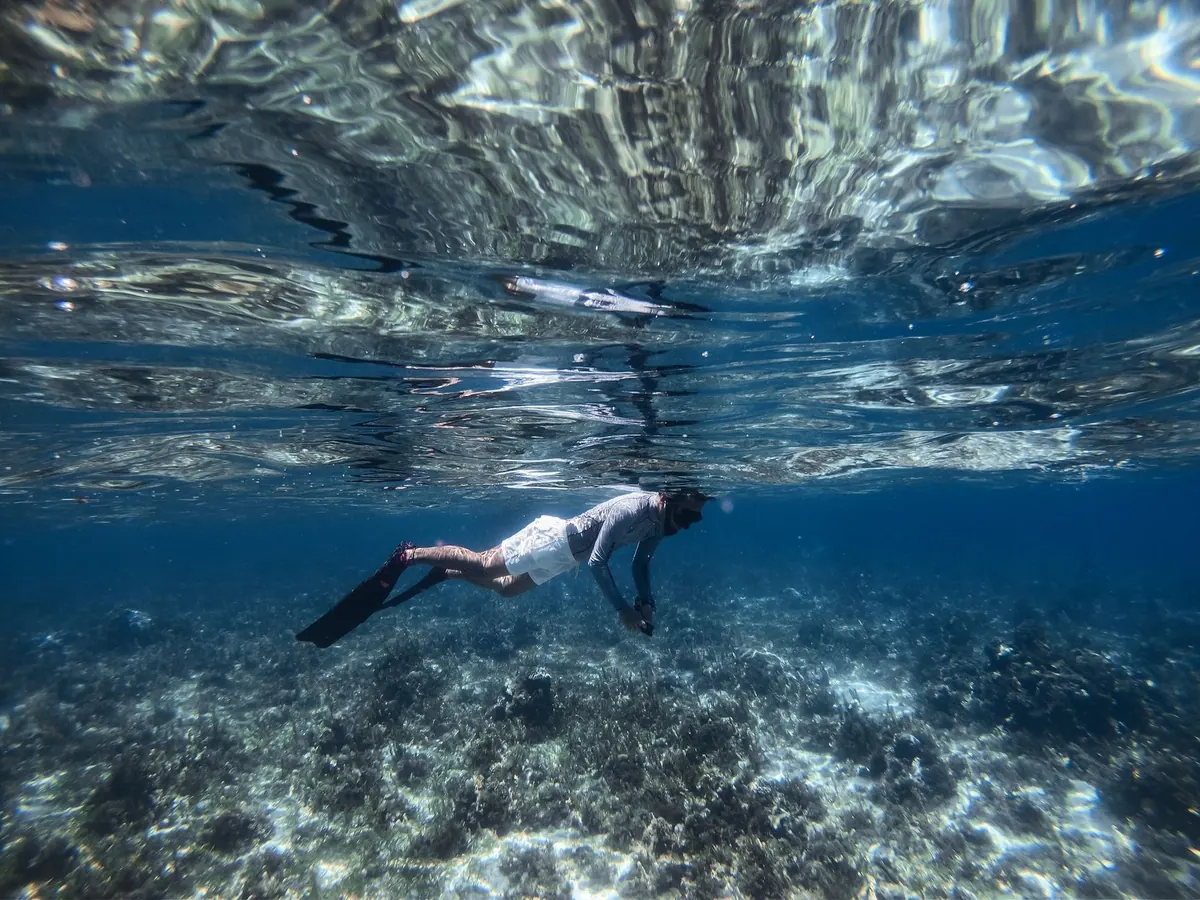
Snorkelling keeps you on the surface. Mask, snorkel, fins, and you float face down, breathing through a tube while the reef sits a metre or two beneath you. You can cover a lot of shallow ground, duck down for ten or twenty seconds if you are comfortable, and come up whenever you like. The skills are basic and the consequences of getting them wrong are usually mild.
Scuba puts a cylinder on your back and lets you breathe underwater for the length of the dive — commonly half an hour to an hour, depending on depth, how hard you are working and how cold you get. You descend, manage your buoyancy, watch your air and your no-decompression limit, and surface with a plan. Entry-level certification generally allows dives to around 18 metres in conditions similar to your training; deeper water needs further courses.
Access: where each one can take you
Snorkelling wins on access. If there is reef within a comfortable swim of the shore, you can go. Lagoon edges, reef flats, the outside of a fringing reef, jetties, rocky points — all fair game, with no booking, no boat and no schedule. The catch is that conditions decide everything. Wind, swell, tide and current can turn a safe snorkel into a hard swim, so check a tide table, ask someone local, and aim for the calm window in the morning before the wind builds.
Scuba needs infrastructure: a dive centre, a filled cylinder, a buddy, a briefing, and often a boat. In exchange it reaches places snorkelling cannot. Walls, pinnacles, deeper coral terraces, wrecks and current-swept sites that only make sense with a guided group. If your trip is short and the good reef is offshore, scuba may be the only way you see it at all.
Training and the learning curve
Snorkelling has a low bar and a wide gap between adequate and good. An afternoon of practice is genuinely enough to start, but a few small skills separate a pleasant swim from a frustrating one.
- Clear a flooded mask without panicking, and clear your snorkel with a sharp puff.
- Kick from the hip with straight legs rather than pedalling a bicycle.
- Float face down and relax. A tense, vertical body sinks and burns energy.
- Stay with your buddy and check back often. It is easy to drift apart with your head down.
Scuba is a course, not a lesson. Certification involves theory, confined-water practice and several open-water dives, usually spread across three or four days. You will learn regulator recovery, mask clearing, buoyancy control, equalising your ears on descent, controlled ascents and safety stops. None of it is difficult, but it only becomes habit with repetition — and a diver still thinking about their kit is not looking at the reef.
One practical note: diving has real medical implications. Most agencies require a health questionnaire, and conditions such as asthma, heart problems, epilepsy, or ear and sinus trouble, along with certain medications, need a proper assessment. Speak to a doctor qualified in diving medicine before you book, not after. Snorkelling carries fewer formal requirements, but the same logic applies if you have heart or breathing concerns.
What it costs
Snorkelling is cheap to try and cheap to keep doing. A decent mask, snorkel and fins are a modest one-off purchase that lasts years, and rental from a beach hut or dive shop is cheaper still. There is no certification to pay for and no fixed itinerary.
Scuba front-loads the cost. The certification course is the largest single expense, then every trip afterwards — boat fees, cylinder fills, equipment rental, marine park charges. Prices vary enormously between countries and operators, so do not shop on headline price alone. Ask what is included:
- How many divers per instructor or guide?
- Are cylinders, weights, wetsuit and computer included, or extra?
- Are boat, park and equipment fees charged separately?
- Is there a refresher session if you have not dived for a while?
If money is the deciding factor, snorkel first and give yourself a season to work out whether you actually love being in the water.
What you will actually see
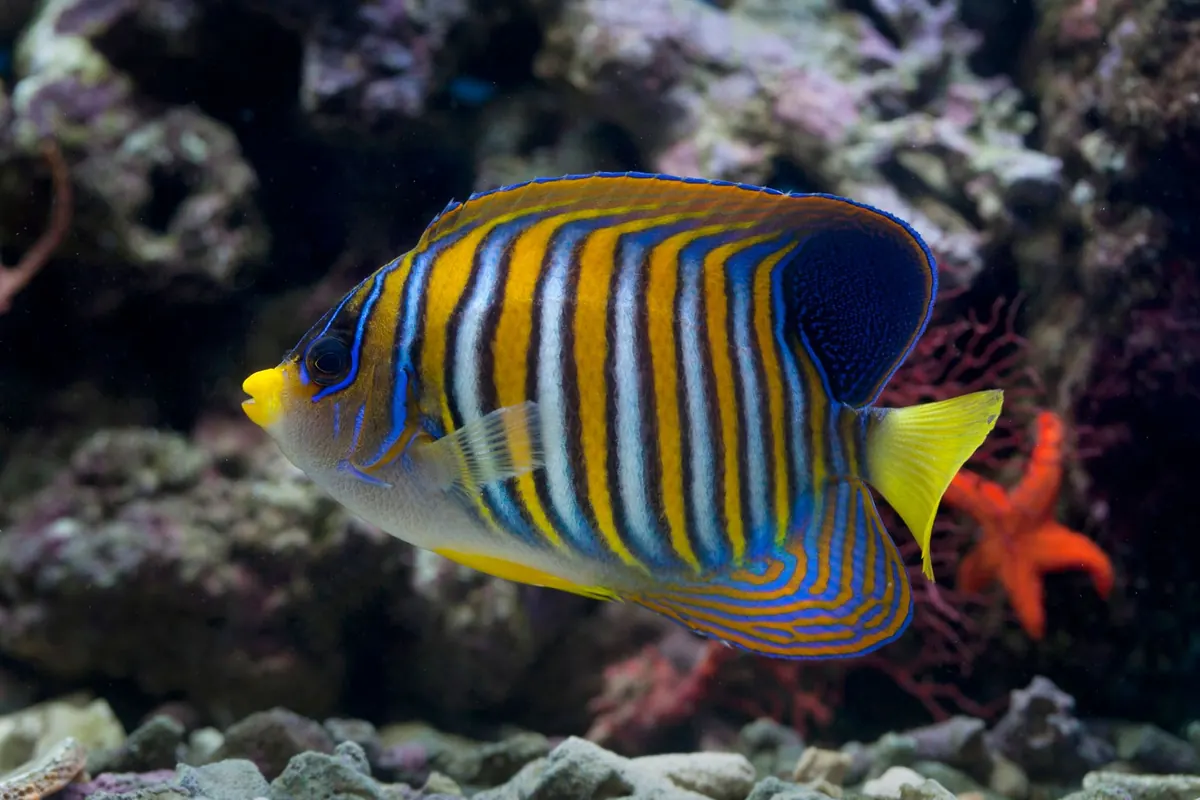
Snorkelling shows you the top of the reef, and the top is busy. Parrotfish scraping at coral, wrasse darting between branches, damselfish guarding patches of algae, the occasional turtle grazing on seagrass, anemones with their resident clownfish. Over a healthy shallow reef in good visibility, that is a great deal of life.
Scuba adds depth, and depth changes the cast: gorgonian fans, soft corals, cleaning stations where larger fish queue for attention, schools hanging just off the wall, and the quiet that comes with being below the surge. It also opens up night diving, which is a different reef entirely. Both are better early, when the light is cleaner, the wind is lighter and the fish have not yet been disturbed by the first boats.
Reef impact: which is gentler?
Neither activity is automatically reef-safe, and the honest answer is that a diver with good buoyancy does less damage than a snorkeller standing on coral to adjust a mask. Training and care matter far more than the label.
Snorkelling risks are mostly about shallow contact: fins scraping coral heads, hands grabbing for balance, feet touching down in water that looked deeper than it was. Stay horizontal, keep your hands to yourself, and give yourself a metre of clearance above anything living. Sunscreen is its own small problem, so choose a mineral or reef-safe product and cover up with a long-sleeved rash vest to reduce what washes off into the water.
Scuba risks are about equipment and attention. A dangling console, an unclipped camera or a slow descent with too much air in the jacket can all break coral. Take the buoyancy skills seriously, tuck everything in, and keep the same distance rule. Never feed fish, never collect, and do not stand on the reef to put your fins on.
The reef does not know or care which certification you hold. It only knows whether you touched it.
Which to choose, and how to start
- Choose snorkelling if you want to be in the water today, you are travelling with children or nervous swimmers, your budget is tight, or your trip is short.
- Choose scuba if you are staying long enough to finish a course, you are relaxed in deep water, and you want the wall rather than the flat.
- Do both on the same trip. A shore snorkel in the morning and a two-tank boat dive in the afternoon cover more of a reef than either one alone.
- Try before you commit with a supervised introductory dive at a reputable centre. It is not a certification, but it will tell you whether a mask and regulator feel like freedom or panic.
Whichever you pick, go with a centre or guide that briefs you properly, stay close to your group, and keep your distance from the coral. Check that your travel insurance covers the diving you plan to do, and take medical advice before diving if anything about your health gives you pause. Then get in the water and look down.
Photo: John Cahil Rom / Pexels