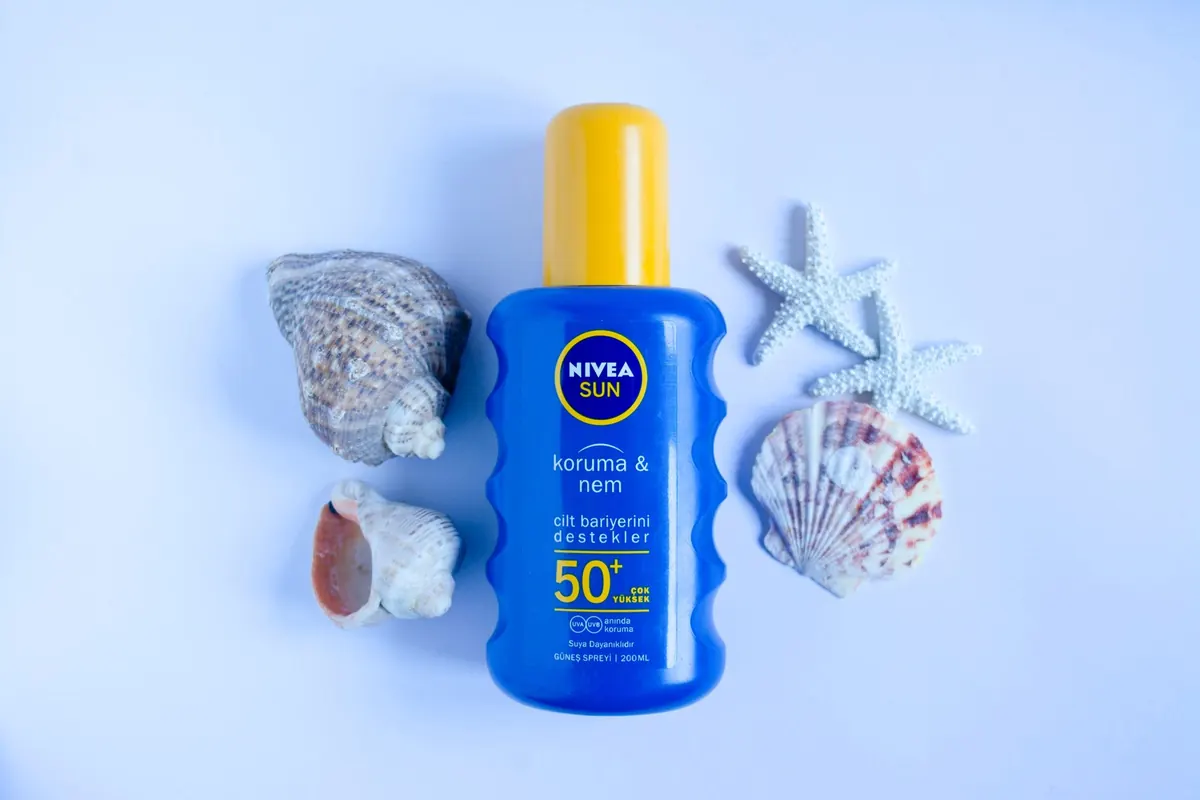
The phrase "reef-safe" sells a lot of sunscreen. It appears on everything from a supermarket own-brand tube to a tin with a turtle on the lid, and in the UK it is entirely unregulated — any brand can print it without proving a thing. That doesn't mean the good ones are lying. It means the label is a starting point, not an answer, and the useful information sits on the back of the pack in the ingredient list most of us never read. Two minutes with a tube in your hand is enough to make a better choice.
Why "reef-safe" means almost nothing on its own
In the UK, sunscreen is a cosmetic. The rules governing it are about human safety and labelling: sun protection factor, UVA protection, ingredient names, allergens. Nothing in them defines "reef-safe", "reef-friendly", "ocean-friendly" or "reef conscious", and no body checks whether the claim is true. A brand that has removed oxybenzone can say it. So can a brand that has done nothing except redesign the packaging.
Keep some perspective, too. Sunscreen is one small input into the water around a reef, next to warming seas, coastal construction, sewage, agricultural run-off, overfishing and disease. If the choice is between wearing sunscreen and wearing none, wear it. Reading labels is about reducing an avoidable contribution, not carrying the whole problem on your shoulders.
The filters that attract the most attention
Two UV filters sit at the centre of the argument: oxybenzone (listed as benzophenone-3) and octinoxate (ethylhexyl methoxycinnamate). Both have been restricted for sale in places including Hawaii, Key West and Palau. Laboratory work has linked them to coral bleaching and damage to coral larvae, sometimes at very low concentrations. Translating a lab result into a real-world figure for a reef is genuinely difficult — dilution, currents and sunlight all change the picture — but the direction of the evidence is consistent enough that avoiding them is a sensible default when you have a choice.
Other filters come with questions rather than answers. Octocrylene and homosalate have both been studied for environmental effects, and the picture is less settled. There is also more to a formula than its filters: fragrance, some preservatives, silicones and microplastics all wash off with you, and none of them help a reef.
Names to look for on the back of the tube
- Benzophenone-3, also written as oxybenzone — the most widely restricted filter.
- Ethylhexyl methoxycinnamate, also written as octinoxate — restricted in the same places.
- Octocrylene and homosalate — common, with less clear-cut evidence around them.
- Zinc oxide and titanium dioxide — mineral filters, often paired with a "non-nano" claim on the front of the pack.
Mineral or chemical — which is better for the sea?
Mineral filters sit on the skin and scatter UV. Chemical filters absorb UV and convert it to heat. Neither category is automatically reef-friendly. A mineral formula can still be heavy on fragrance and nano particles; a chemical formula can be built from filters that raise fewer concerns. Judge the ingredients, not the story about working in harmony with the ocean.
That said, mineral formulas hold up well for reef-conscious buyers. They tend to have shorter ingredient lists, are often fragrance-free and suit sensitive skin. The trade-offs are real: they can leave a white cast on darker skin tones, feel thicker, and take more work to spread. Tinted versions and more transparent zinc formulas have improved this considerably in recent years.
Whichever you choose, SPF 30 to 50 is plenty. There is no reef benefit in a factor 100 bottle, and higher factors generally just mean more UV filter in the formula. You still have to reapply.
How to read a label in five minutes
- Turn the tube over and find the UV filters. They usually sit near the top of the ingredient list, above the plant extracts and the scent.
- Note the first two or three. Those are doing most of the work — cross-check them against the list above.
- If the formula uses zinc oxide or titanium dioxide, look for "non-nano" and check whether the ingredient is marked [nano] in the INCI list.
- Look for a third-party mark. The one you'll see most often is Protect Land + Sea certification, which tests against a published list of ingredients. It isn't a government standard and it isn't perfect, but it means someone outside the brand has looked.
- Scan the rest of the list and the packaging claims. No added fragrance, no parabens, no microbeads, recyclable or refillable packaging — small wins that add up when they appear on the same tube.
- Check the protection claims. Aim for SPF 30 or higher with UVA protection, shown by the UVA circle logo in the UK and EU. "Water resistant" and "very water resistant" are defined by standard immersion tests, so those words carry actual weight.
Water resistance, sprays and how much you use
A formula that stays on your skin is a formula that isn't in the water, which is why water-resistant versions matter on a boat where you're in and out of the sea all day. Sprays are the opposite problem: aerosol and pump versions put a lot of product into the air and onto the sand, where it eventually washes back into the sea. If you like the convenience, spray into your palm first, or use a stick for your face and ears. Lotions give you the most control.
Quantity is the other half of the equation. Most of us apply far too little and then wonder why we burn. A full-body application for an adult is roughly a shot-glass worth. Get it on 15 to 20 minutes before you get in the water so it has time to settle, then reapply after a long swim or a towel-dry.
A routine that works on a dive trip
The lowest-impact sunscreen is the one you never needed. Build the day around cover first:
- Long-sleeve rash vest or UV top, board shorts, wide-brimmed hat, sunglasses.
- Shade, or a boat canopy, between 11am and 3pm when the sun is highest.
- Sunscreen on the parts that stay bare — face, ears, neck, hands, backs of knees — plus the bits everyone forgets: the tops of your feet, your
Photo: Betül Üstün / Pexels